

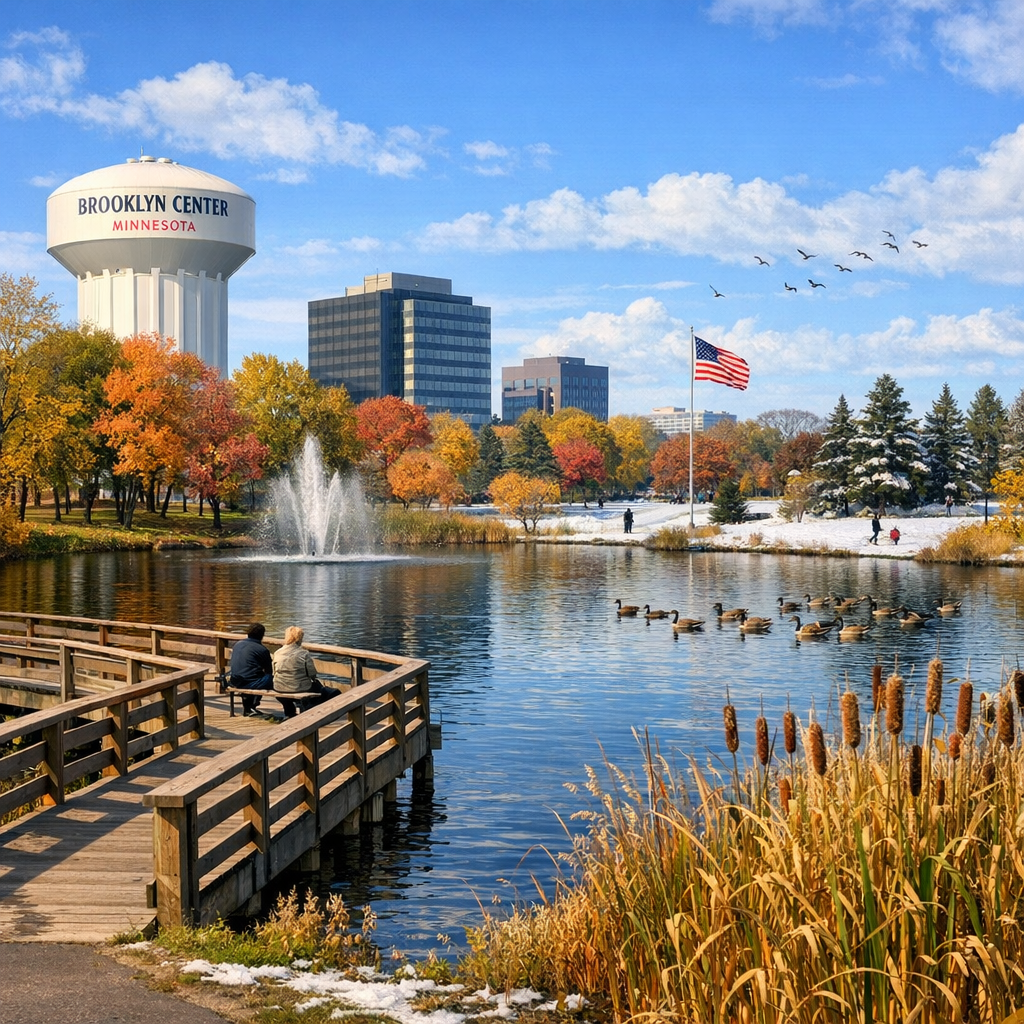
Brooklyn Center, Minnesota, experiences a humid continental climate characterized by warm, wet summers and cold, snowy winters. Throughout the year, residents witness significant temperature fluctuations, with average highs ranging from 23.2°F (-4.9°C) in January to 82.7°F (28.2°C) in July. Precipitation is fairly evenly distributed, with June typically being the wettest month, averaging 4.73 inches (120.14 mm) of rainfall.
Seasonal Weather Patterns
Spring
Spring brings a gradual warming trend, with average temperatures rising from 40.9°F (4.9°C) in March to 68.4°F (20.2°C) in May. This season also sees an increase in rainfall, supporting the growth of local flora.
Summer
Summers are warm and humid, with average highs peaking at 82.7°F (28.2°C) in July. Rainfall remains consistent, contributing to lush green spaces throughout the city.
Fall
Autumn features cooler temperatures, with averages dropping from 72.6°F (22.6°C) in September to 42.3°F (5.7°C) in November. The season is marked by vibrant foliage and a gradual decrease in precipitation.
Winter
Winters are cold and snowy, with average lows reaching 7.2°F (-13.8°C) in January. Snowfall is common, creating picturesque winter landscapes.
Environmental Initiatives
Stormwater Management
The City of Brooklyn Center actively manages stormwater through an extensive system of 84 miles of storm sewers and nine regional or neighborhood treatment facilities. These efforts aim to reduce pollution in local water bodies by treating stormwater runoff before it enters lakes, rivers, and streams. Residents are encouraged to participate by properly disposing of hazardous materials and reporting any illicit discharges into the storm drain system.
Deer Management
To maintain a balanced ecosystem, the city implements a deer management plan, including controlled hunts in designated areas like the Palmer Lake Basin and Kylawn Preserve Park. These measures help prevent overpopulation and reduce human-wildlife conflicts. Additionally, feeding deer is prohibited to discourage unnatural congregation and potential safety issues.
PFAS Monitoring
Brooklyn Center conducts regular testing of its drinking water for per- and polyfluoroalkyl substances (PFAS), commonly known as “forever chemicals.” Current results indicate that the city’s water meets all federal standards for PFAS levels. Ongoing monitoring ensures the safety and quality of the water supply for residents.
Understanding Brooklyn Center’s climate and participating in local environmental initiatives are essential for fostering a sustainable and healthy community. Residents are encouraged to stay informed and engage in practices that support the city’s environmental goals.