

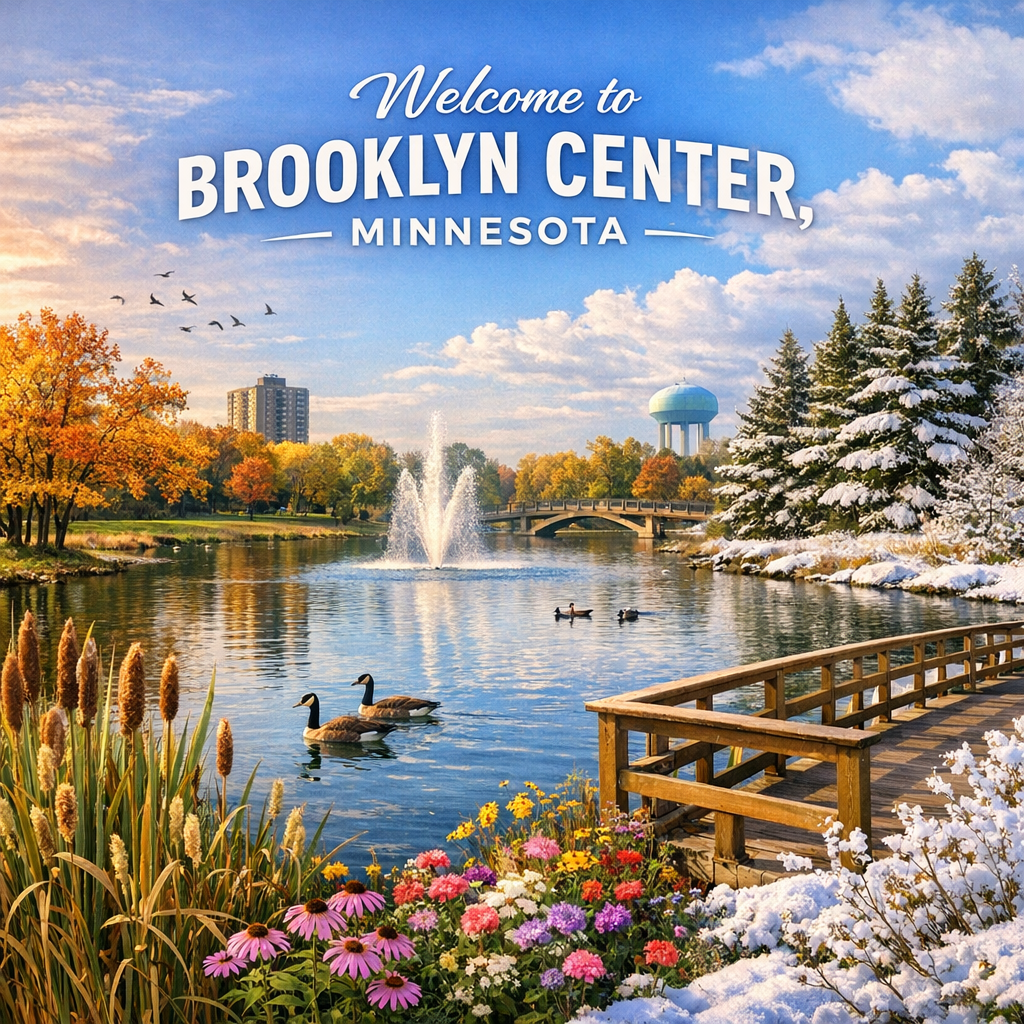
Brooklyn Center, Minnesota, experiences a humid continental climate characterized by warm, wet summers and cold, snowy winters. Throughout the year, residents witness significant temperature fluctuations, with average highs ranging from 24°F (-4.9°C) in January to 83°F (28.2°C) in July. Precipitation is fairly evenly distributed, averaging 33.4 inches (848.61 mm) annually, with June typically being the wettest month.
Seasonal Weather Patterns
In winter, temperatures often drop below freezing, accompanied by snowfall that contributes to the city’s picturesque landscapes. Spring brings a gradual warming trend, with increasing daylight hours and blooming flora. Summers are warm and humid, with July being the hottest month. Fall sees a cooling trend, with vibrant foliage marking the transition back to winter.
Environmental Initiatives
Brooklyn Center is proactive in managing its natural resources and addressing environmental concerns. The city has implemented a deer management plan to maintain a balanced ecosystem, conducting controlled hunts in designated areas when deer populations exceed recommended levels. Additionally, the city enforces ordinances prohibiting the intentional feeding of deer to prevent disruptions in natural foraging behaviors.
To combat mosquito-borne diseases, the Metropolitan Mosquito Control District (MMCD) conducts larval control activities across the region, including Brooklyn Center. Residents are encouraged to eliminate standing water on their properties to reduce mosquito breeding grounds.
Water quality is another focus area. The city educates residents on the importance of keeping chemicals out of lakes, rivers, and streams. Proper disposal of household chemicals, automotive fluids, and lawn care products is emphasized to prevent stormwater contamination. Residents are urged to report any illicit discharges into the storm drain system to city authorities.
Furthermore, Brooklyn Center is addressing concerns related to per- and polyfluoroalkyl substances (PFAS), commonly known as “forever chemicals.” These substances are found in various consumer products and have been detected in water sources. While the full health impacts are still being studied, the city is committed to monitoring and managing PFAS levels to ensure public safety.
By understanding the local climate and participating in environmental initiatives, residents of Brooklyn Center can contribute to a healthier and more sustainable community.