

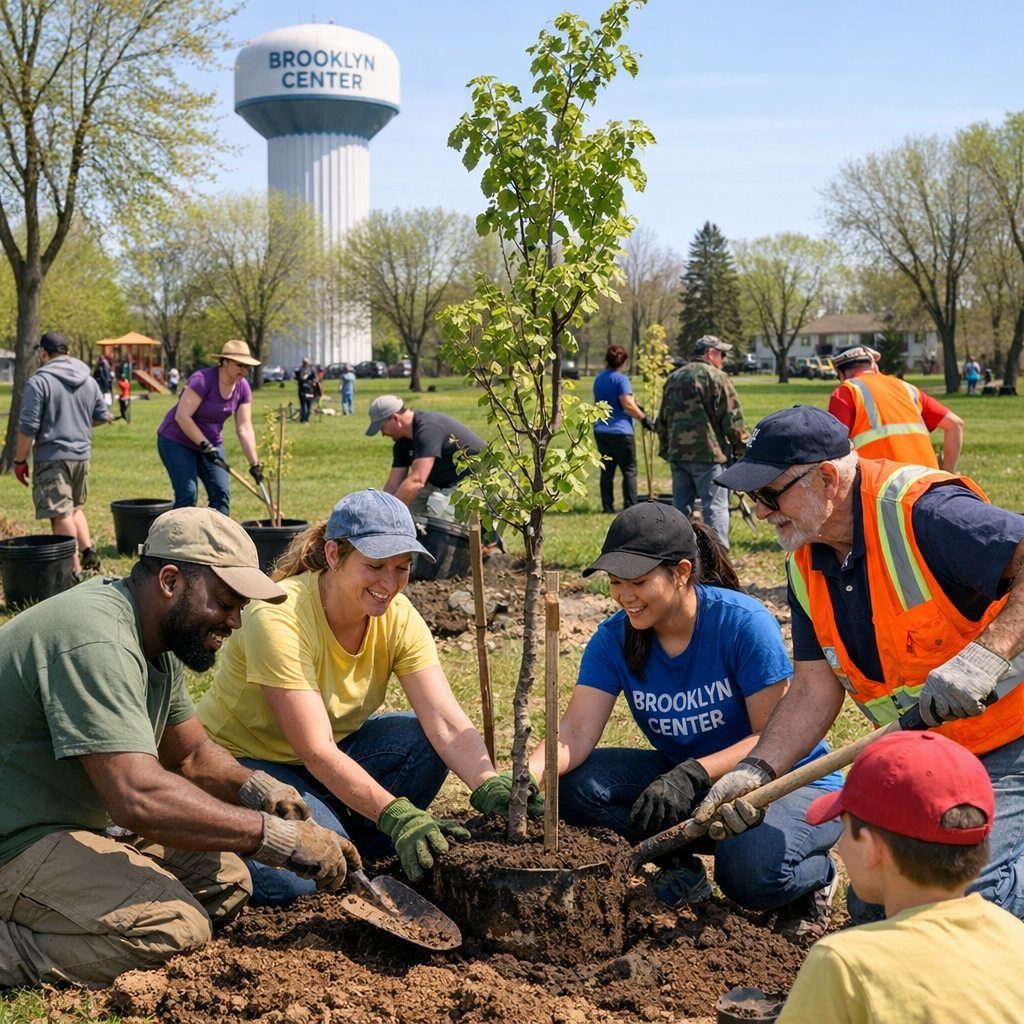
Brooklyn Center is actively engaged in several initiatives aimed at enhancing the local environment and promoting sustainability. These efforts, combined with an understanding of the city’s climate data, provide residents with valuable insights into their community’s environmental landscape.
Community Environmental Initiatives
Great River Greening Partnership
The city has partnered with Great River Greening to expand and improve the urban tree canopy. This initiative involves planting climate-resilient tree species and distributing free trees to community members. The goal is to combat extreme heat, enhance climate resilience, and improve equitable access to high-quality tree canopies across the state. This project is supported by funding from the Inflation Reduction Act and the USDA Forest Service’s Urban and Community Forestry Program.
Grandview Neighborhood Pollinator Project
In collaboration with the Trust for Public Land and Xcel Energy, Brooklyn Center is developing a pollinator habitat in the Grandview neighborhood. This habitat aims to benefit monarch butterflies and other pollinators, while also serving as an outdoor classroom for Brooklyn Center Elementary STEAM students. The project is part of a broader initiative to protect and enhance pollinator habitats throughout the city.
Adopt-A-Park Program
Established in 1992, the Adopt-A-Park program invites community volunteers to assist in keeping Brooklyn Center’s parks clean. This initiative is open to various groups and individuals, promoting a cleaner and healthier environment. Volunteers help save tax dollars by collecting thousands of pounds of trash each year, contributing to the city’s overall beautification and environmental health.
Climate Data Overview
Understanding Brooklyn Center’s climate is essential for residents and planners. The city experiences a humid continental climate with distinct seasons. Average high temperatures range from 23.2°F in January to 82.7°F in July, while average low temperatures range from 7.2°F in January to 63.6°F in July. Annual precipitation averages 33.41 inches, with the wettest months typically being May and June.
These climate patterns influence various aspects of life in Brooklyn Center, from agriculture and gardening to infrastructure planning and energy consumption. Being aware of these trends helps the community adapt and plan for seasonal changes effectively.
Get Involved
Residents are encouraged to participate in these environmental initiatives to foster a sustainable and resilient community. Whether it’s planting trees, creating pollinator habitats, or keeping parks clean, every effort contributes to the well-being of Brooklyn Center’s environment.
For more information on how to get involved, visit the city’s official website or contact the Public Works Department.